Masr Phrase

Home / About

About Masr Phrase Academy

A small language school in the heart of Alexandria's Attarine quarter, built around one conviction: travellers learn faster when they start with speaking, not grammar.

Founded in Alexandria, 2020

How the academy started

Masr Phrase Academy grew out of a problem Layla Mahmoud kept seeing during the years she worked as a language tutor and tour guide in Alexandria. Visitors arrived with phrasebooks full of Modern Standard Arabic — the formal written language used in newspapers and political speeches — and were confused when the people they met on the street answered back in something that sounded completely different. Taxi drivers, stallholders at the Attarine antiques market, café owners on Corniche Road: they all spoke Masri, Egyptian Arabic, and the gap between what tourists had studied and what they actually heard was causing real friction. Bags of patience from both sides, a lot of miming and phone-translation, and a persistent sense that a short course in the right dialect would solve most of it.

Layla launched the first edition of the Masr Phrase phrasebook in early 2020 as a one-page handout she gave to participants on a walking tour of Attarine. It covered greetings, numbers, basic directions and a handful of market phrases. Feedback was immediate and enthusiastic. Visitors emailed her saying they had used the phrases at the Khan el-Khalili bazaar in Cairo, at the Temple of Luxor, at small restaurants in Aswan. The handout became a PDF. The PDF became a website. Within a year the academy had grown to include a team of four, a structured curriculum and the first live short courses delivered online to travellers preparing for upcoming trips.

The Attarine quarter of Alexandria was a deliberate choice for the academy's base. It is one of the most linguistically rich corners of Egypt — a neighbourhood of antique dealers, Coptic craftspeople, old coffee houses and a street market that has been running since the Ottoman era. The Arabic spoken there is dense with idiom, warmth and the particular rhythm of Alexandrian Masri, which carries echoes of Mediterranean Greek and Italian that have faded into the accent over generations. Teaching from here felt honest: this is where the language lives, and the phrases we teach are the ones we hear every day outside the window.

Masr Phrase Academy class in session at the Alexandria office
Our approach

Why Masri, and why transliteration-first

The most common mistake language products make for Arabic is teaching the wrong register. Modern Standard Arabic (Fusha) is the prestige variety — it's on television news, in textbooks, in the Quran — but Egyptians don't use it when they buy bread or argue about a football match or ask a neighbour to pass the salt. Masri is the mother tongue of roughly 100 million people, and because Egyptian cinema and music have been dominant across the Arab world for decades, it is also the dialect most widely understood from Morocco to Iraq. Learning Masri means being understood not just in Egypt but across much of the Middle East.

The second choice we made early was to teach transliteration first and script second. The Arabic alphabet is learnable, and we cover it in our script basics guide for those who want it. But a traveller with two weeks before their flight does not need to master a new writing system before they can say hello. Our transliteration system is consistent, plain and uses standard English letters with a small number of marked characters for sounds that have no English equivalent. Most learners can read a phrase and produce something recognisable within seconds. Speed of usability matters: the goal is real conversation, not an examination.

We also made a deliberate decision to keep the speaking focus dominant. Egyptian Arabic grammar is real and interesting, but explaining verb conjugation tables does not help someone negotiate a better price for a hand-woven rug. Every lesson we build asks: when and where will you use this, and what does the person you're talking to expect to hear? That question keeps the material grounded. We cover numbers and prices, directions and transport phrases, market talk in at the market and full pronunciation guidance in our pronunciation guide — all organised around real situations, not grammar categories.

What we stand for

Mission and values

Free base, always

The core phrasebooks — essential phrases, pronunciation, numbers, getting around, market talk and script basics — are free and will remain free. Language access should not be paywalled, and the traveller on a tight budget deserves the same ability to communicate respectfully as anyone else. We sustain the free content through the paid short courses that go further: live practice, teacher feedback, structured conversation.

Respect over performance

We teach phrases, but we also teach context. When to use the formal salaam and when the casual ahlan is enough. How bargaining works in Egyptian culture as a social exchange rather than an adversarial contest. Why saying shukran with a hand on the heart lands differently than just saying it. The goal is travellers who interact respectfully, not travellers who recite a script without understanding what it means.

Spoken Egyptian first

We will not pivot to Modern Standard Arabic because it has broader institutional prestige. Masri is the living language of 100 million people and the variety our learners will encounter on the ground. As long as people travel to Egypt, they need Masri, and we are committed to teaching it well — with accurate phonetics, honest cultural notes and real-world example sentences from the streets of Cairo and Alexandria rather than invented textbook scenarios.

Small and quality-controlled

The live short courses are kept deliberately small — a maximum of six participants per session. We could run larger groups, but the speaking practice that makes the difference happens when a teacher can hear every voice, correct every sound and push every learner to use the phrase actively rather than passively. See the short courses page and pricing page for details on how the live sessions work.

The people behind the phrases

Meet the team

Four people in Alexandria and Cairo who spend their days thinking about how to make Egyptian Arabic accessible to the outside world.

Layla Mahmoud, founder and head teacher
Founder & head teacher

Layla Mahmoud

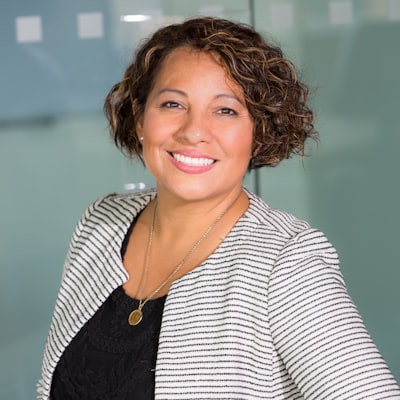
Layla grew up speaking Alexandrian Masri at home and learned Modern Standard Arabic in school — a split that gave her unusual insight into how the two registers differ in rhythm, idiom and practical usefulness. She studied Arabic linguistics at Alexandria University and spent seven years as a private tutor before pivoting to build the academy in 2020. Her teaching philosophy is rooted in immersion without overwhelm: she wants learners talking within the first ten minutes of a session, even if imperfectly. She speaks Arabic, English and conversational Italian, and her knowledge of the Attarine neighbourhood, where she has lived for most of her adult life, feeds directly into the cultural notes that run through every lesson. Outside work she volunteers with a literacy programme for adults in the Attarine quarter and writes a small personal blog about the linguistics of Egyptian food vocabulary.


Karim Adel, pronunciation and audio lead
Pronunciation & audio

Karim Adel

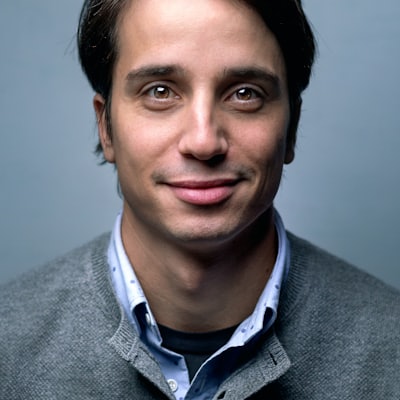
Karim has a background in phonetics and worked for several years in radio production in Cairo before joining Masr Phrase in 2021. His focus is the acoustic side of Egyptian Arabic: the sounds that don't exist in European languages, the stress patterns that make a sentence feel natural rather than robotic, and the subtle difference between the Cairene and Alexandrian versions of certain vowels. He is responsible for the pronunciation guide that underpins all the phrasebooks, and he develops the spoken-word components of the live short courses. Karim's method is built on mimicry before explanation: he believes learners should hear a sound many times and imitate it before they read a phonetic description of what their mouth should be doing. This approach, borrowed from professional voice coaching, dramatically shortens the time it takes to produce sounds that are actually understood by native speakers. He is also the person learners most often credit in feedback forms with "finally understanding what I was doing wrong."

Salma Nour, course design lead
Course design

Salma Nour

Salma joined the academy in 2022 as the person responsible for turning raw language content into a learning experience that works for busy people who have never studied Arabic before. Her background is in instructional design — she spent three years building e-learning modules for a Cairo-based tourism company before coming to Masr Phrase — and she brings a precise, user-centred approach to every lesson structure. She is the reason the phrasebooks are organised by situation rather than by grammatical category, the reason each phrase appears first in transliteration and only then in Arabic script, and the reason the free content on the site is genuinely self-sufficient for basic travel. Salma is also the team's most honest critic: every new lesson goes through a review where she asks whether a total beginner could pick it up at midnight before an early flight and actually be helped by it. Many drafts have been sent back for revision on those grounds. She is based in Cairo and commutes to Alexandria for recording sessions.

Tarek Aziz, community and tutor network
Community & tutors

Tarek Aziz

Tarek manages the network of tutors who deliver the live short courses and the private tutoring sessions, and he runs the learner community that has grown around the academy since 2022. He came to the team from a background in adult education coordination in Sharm el-Sheikh, where he worked with international visitors learning conversational Arabic in an intensive holiday format. That experience shaped his view that motivation is the single most important variable in adult language learning: a learner who wants to use a phrase tomorrow will acquire it faster than a learner working through a syllabus for abstract reasons. He recruits tutors on the basis of their ability to keep sessions lively and their willingness to let learners make mistakes without embarrassment. He is also the first point of contact for private tutoring enquiries and works with groups as well as individuals. Tarek believes the best advertisement for any language school is a traveller who comes back from Egypt and says the phrases actually worked — and he takes that personally.

In numbers

Six years in, where we stand

4 200+

Learners served

Travellers who have used our free phrasebooks or enrolled in a live short course since the academy launched in 2020 — from first-time Egypt visitors to returnees who want to go deeper than survival phrases.

1 100

Phrases documented

Phrases across all six free topic guides, each checked by a native speaker, given a consistent transliteration, placed in a sample sentence and annotated with a usage note where context matters.

340+

Live lessons taught

Group and private sessions delivered since the short course programme launched in 2021, covering everything from a single pre-trip crash session to a twelve-lesson private tutoring package for a researcher relocating to Cairo.

28

Countries reached

Home countries of our online learners, spanning North America, Europe, Australia and East Asia — evidence that the appetite for spoken Egyptian Arabic travel preparation is genuinely global, not just a niche for the nearest neighbours.

2020 — 2026

Timeline

2020

First phrasebook

Layla Mahmoud produces a one-page handout of essential Masri phrases for participants on her Attarine walking tours. The response is enthusiastic enough that a digital version is published in August — the seed of what will become the academy's free phrasebook library.

2021

Website and team

Karim Adel joins to develop the pronunciation guide; the first version of the structured website launches under the Masr Phrase Academy name. The first live online short courses run in September for a small cohort of travellers preparing trips to Egypt. The company is formally registered in Alexandria as Masr Phrase Academy L.L.C.

2022

Curriculum expansion

Salma Nour joins as course design lead; the phrasebook library expands to six topic guides covering essential phrases, pronunciation, numbers and money, getting around, at the market and script basics. Tarek Aziz joins to build the tutor network and learner community.

2023

Private tutoring

One-to-one tutoring sessions launch in response to demand from learners who want faster progress than a group course allows. Sessions are available online globally and in person in Alexandria. The programme attracts researchers, business travellers and people planning extended stays in Egypt.

2024

1,000 learners milestone

The cumulative learner count passes 1,000 — a milestone that feels significant for a small school built around spoken dialect teaching. The team runs a free open week with three public crash-course sessions to mark the occasion. Learner feedback leads to a significant revision of the pronunciation guide's section on emphatic consonants.

2025

In-person programme in Alexandria

A regular schedule of in-person short courses launches at the Attarine office, serving visitors already in Egypt who want a half-day or full-day intensive. The format — three hours of speaking practice, a tour of the Attarine market with Layla narrating in Masri, and a debrief — becomes the academy's most reviewed and recommended offering.

2026

4,200 learners and growing

The academy enters its sixth year with the full curriculum stable, a trusted tutor team and learners from 28 countries. Work continues on two new topic guides planned for later in the year. The free phrasebooks remain free, and the commitment to quality-controlled small-group teaching remains unchanged.

Ready to start speaking?

Open the free phrasebook and pick up twenty phrases in the next fifteen minutes, or send us a message and we'll match you with the right short course before your trip.

Open the phrasebook   View courses